Premium lifestyle campaigns rarely fail because the model could not hit the look. They fail because the face was cast for one frame and the campaign needed five. Reading a portfolio for range — not just for the single strongest image — is the part of casting that decides whether a shoot day stretches or stalls.
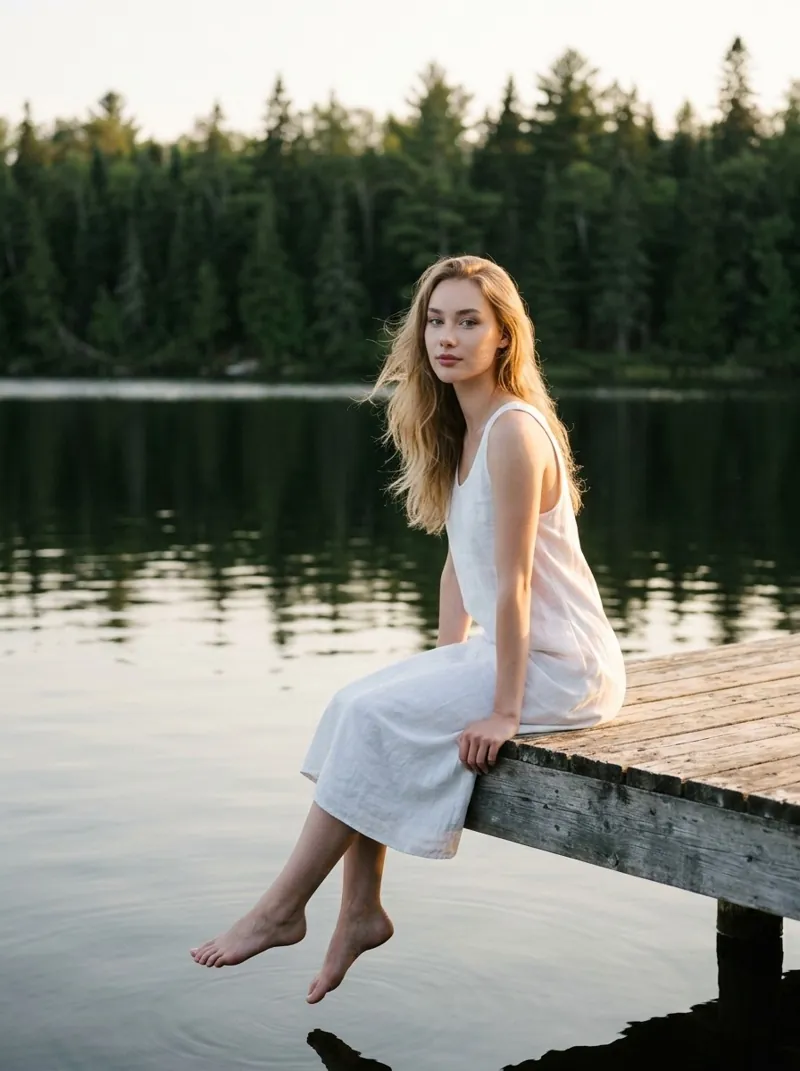
What "range" actually means in a portfolio
Range is not how many outfits appear. It is whether the same face can change register while staying recognizably itself. Watch for three shifts across a portfolio:
- Expression control — can it go from a still, makeup-precise beauty close-up to an energized evening frame without the features looking like two different people?
- Light and environment — does it hold up in flat daylight, hard sun, and low evening light, or only in one?
- Mood — soft and feminine in one frame, composed and editorial in the next, relaxed and sunlit in a third.
A portfolio that demonstrates all three in a coherent way is telling you the model can carry a multi-deliverable campaign, not just a hero shot.
Specialist vs. versatile: when each wins
A category specialist is the right call when the entire campaign lives in one lane and the bar is extreme — pure beauty for a cosmetics house, for instance, where the close-up is the product. But most premium lifestyle, resort, and hospitality campaigns are not single-lane. They need a beauty frame, an environmental editorial frame, a relaxed in-context frame, and social cut-downs from the same day. There, a versatile face is cheaper and faster than booking three specialists or re-shooting because one register did not land.
Reading for the lanes you will actually need
Before you open a single portfolio, list the lanes the campaign requires. A typical resort or hospitality brief needs:
- Beauty / detail — for product, jewelry, and skincare-adjacent crops.
- Editorial — the brand-image hero with a clear point of view.
- Resort / swim — sunlit, destination-credible, not generic.
- Lifestyle / in-context — believable in a hotel, on a rooftop, in a city, looking unforced.
Then read the portfolio against that list. If a face covers all four convincingly, you have removed the biggest risk in a lifestyle shoot: getting four frames out of one booking instead of compromising on two.
Signals that predict a good shoot day
Beyond range, a few quieter signals correlate with smooth sets:
- Consistency of the face across frames — strong bone structure that reads the same from multiple angles is far easier to light and cut together.
- Restraint — a model who is not over-performing in the portfolio tends to take direction precisely on the day.
- Self-shot and produced frames side by side — if both look intentional, the model understands the camera, not just the photographer.
A quick casting rubric
Score each shortlisted portfolio out of five against the lanes you listed: one point per lane covered convincingly. Then add a sixth point for face consistency across lighting. Anything that clears five is a strong candidate for a multi-deliverable campaign; below that, you are likely booking for a single frame and should plan the day accordingly.
This site is organized to make that read fast: the portfolio is filterable by editorial, beauty, resort, and travel so you can check each lane in seconds, the about page explains the on-camera read, and the services page maps directly to campaign lanes. When the shortlist is set, send the brief through the booking page.
Related: How to brief a model for a shoot.